骨髓移植
概述
我院的骨髓移植(BMT)科室是英国最大的小儿骨髓移植中心,拥有世界顶尖的儿童骨髓移植专家和科学家团队,为患有危及生命的血液类、原发性免疫缺陷类、遗传代谢类、风湿类和胃肠类疾病的儿童提供全面的造血干细胞移植服务。每年,大约进行100例干细胞移植。
我院可提供匹配和不匹配供体的移植,并有项目可使用替代供体-包括脐带血及半相合供体。在我院接受移植的患儿中,大约只有20%的患儿拥有适当匹配供体的家庭捐赠者。因此,我们的许多移植手术都靠来自成年志愿者的骨髓、外周血干细胞或脐带血捐献。我院在各类移植技术层面的杰出经验,让BMT临床团队能够为每位患儿提供最合适的移植选择。
该科室极还在“减少毒性”调理和使用细胞疗法治疗BMT后的病毒并发症这两方面独具专长。我院与伦敦大学学院(UCL)儿童健康研究所(Institute of Child Health, ICH)合作,致力于基因治疗和免疫治疗方面的前沿研究。2015年,GOSH成为第一家使用基因工程供体免疫细胞的实验性基因疗法,为一位患有“无法治愈”白血病的患者进行了治疗的医院。在一个月内,这些由Waseem Qasim教授设计的细胞杀死了该儿童骨髓中的所有癌细胞。
GOSH是英国境内收治的患有罕见疾病的儿童数量最多的医院。我们希望通过系列研究集中了解骨髓移植失败的主要原因(毒性、疾病复发、病毒感染和移植物抗宿主疾病),来提高BMT的成功率。我们的研究还通过对基因治疗和免疫治疗的钻研,致力为80%没有适当配对家庭捐献者的儿童找出更好的替代治疗方案。我们一直致力于帮助需要骨髓和干细胞移植的儿童,重新获得健康。
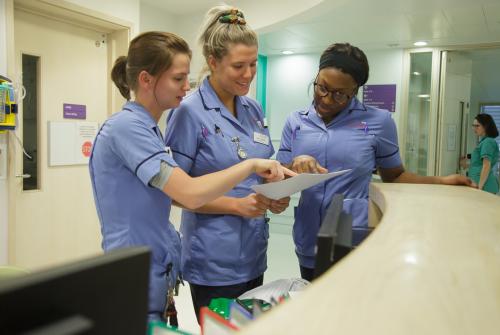
GOSH 在各种类型的预处理方案领域也拥有丰富的经验,从最低强度调节到完全清髓,BMT临床团队能够提供各种最适合患儿状况的预处理方案。GOSH 作为英国三级儿科医院(英国最高级别),我们为本院成熟且强大的多学科团队模式感到自豪。BMT团队可高效获取和整合院内来自不同儿科团队的专家和医疗资源,从而帮助涉及多器官复杂疾病的患儿。另外,移植的过程需要相关医疗专业人员(例如,物理治疗师、营养师、职业治疗师、游戏专家)的多学科联合。他们积极参与并促进每一位患儿的治疗和康复,以尽量减少他们移植过程中的心理负担。
为减少感染机率,所有患儿的移植工作都在具有正压或HEPA 过滤器、和定期换气的隔离室中进行的。并且,GOSH 拥有自己的高配备儿科重症监护病房。我们的移植患儿在出现危及生命的并发症时将会及时进入该病房。在GOSH,移植过程中,每个患儿可进入隔离隔间的护理人员人数上限为3人,以限制感染被带到病人房间的可能性。所有人员都经过定期的无菌技术培训。患儿在整个移植过程中将接受常规的抗真菌、抗病毒和抗菌预防药物。
该部门经JACIE认证,能够为来自世界各地的患儿家庭及临床医生提供第二意见服务。转诊方面,我院可接诊16岁以下患儿的移植需求。GOSH也展开一系列创新疗法的临床试验,允许一线治疗以外的患儿也有机会被转诊到GOSH以进一步考虑试验的可行性。需请注意的是,可使用英国国家医疗服务(NHS)的私立患者不可使用这项服务, 详情请咨询我们。
临床结果
我们用一系列方法来衡量移植的结果,包括所有治疗条件下的生存率、相似条件组的生存率以及治疗的并发症。每年,BMT团队都会对临床活动进行审核。患儿移植一年后的总体生存率经常保持在80-85%,该结果包括了所有的治疗类型和患者情况。
根据2020年的临床数据,我们的同种异体移植患者总生存率为83%,此结果在世界上名列前茅。往往在所有接受干细胞移植治疗的疾病中,恶性肿瘤的总生存率最低。因为接受过大量化疗的患儿,可能在干细胞移植过程中会经历更多的毒性。然而,通过团队的不断努力,患有恶性疾病的同种异体移植患者的总体生存率为85%(2020年), 同种异体移植患者的无病生存率为78%(2020年),实现连续五年的增长。
欲阅读详细GOSH骨髓移植临床结果数据,请点击此处。
我们的治疗领域
- 白血病
- 实体瘤
- 骨髓衰竭
- 免疫缺陷病
- 遗传性代谢障碍
- 自身免疫或免疫失调疾病
转诊您的孩子前来治疗
如您想转诊您的孩子,请填写下方的转诊申请表。我们的同事会在2个工作日内与您取得联系。
必填项
FAQs
Different types of BMT are named according to the relationship between the patient (recipient) and the person from whom the stem cells are obtained (donor).
STEM CELL TRANSPLANT - Autologous BMT – using the patient’s own stem cells Autologous BMT involve the collection of the patient's own stem cells, either by harvesting bone marrow or peripheral blood stem cells (PBSC's). These cells are then frozen and stored. When required, the cells are reinfused (given back) to the patient after high doses of chemotherapy. When the frozen cells are given back to the patient they will rapidly regrow and replace those cells destroyed by the high dose chemotherapy. Because the marrow is that of the patient, there are fewer complications than after a transplant using bone marrow from another individual. An Autologous BMT is most commonly used to allow bigger doses of chemotherapy or radiotherapy to be given to treat oncology tumours such as neuroblastoma and medulloblastoma.
CAR T cell therapy - same theory as stem cell transplant but the patient's cells are sent away for 'manufacturing' before being reimplanted in the patient GOSH was the first hospital in the UK to offer a new pioneering cancer therapy to patients with leukaemia. Patients with B-cell acute lymphoblastic leukaemia (ALL) can now receive the new personalised treatment, known as CAR-T therapy. This is the first treatment of its kind to become available to UK and international patients in the UK CAR-T therapies are specifically tailored for individual patients and work by harnessing the patient’s own immune system to fight cancer. In a complex manufacturing process, immune cells are taken from a patient’s blood and reprogrammed to specifically to target and kill cancer cells. ALL is a severe form of leukaemia that affects around 600 people per year, most of whom are children between the age of 2 and 5. Although the outlook for children with ALL has dramatically improved over the last decade, 10-15% of patients still do not respond to standard treatments. This therapy has been shown to be effective in treating patients with particularly aggressive or relapsed cancers where other treatments have failed.
Allogeneic BMT - using donor cells for the patient Allogeneic BMT are transplants from a donor. The most common and most suitable donor used is a brother or sister of the patient. HLA antigens, the tissue typing groups important in establishing compatibility between donor and recipient, are inherited half from each parent. This means any brother / sister pair have a 1:4 chance of being HLA identical and therefore suitable as a donor / recipient pair for a BMT. Unless parents are related ie. cousins, they are rarely suitable as donors for their children. Sometimes however, a search in the extended family may identify a suitable relative (parent, grandparent, aunt or uncle ) who is fully matched or only mismatched at one of the 6 major HLA antigens. A relative who matches at 5:6 of the HLA antigens is a suitable donor for a transplant but more complications are expected than if a fully matched brother or sister is the donor.
MUD - Matched unrelated donor Patients who do not have a suitable donor in the family, may find an unrelated donor on one of the world wide Volunteer Bone Marrow Donor registries. Searching these registries and identifying a suitable donor is a time consuming and expensive exercise. Although a donor will not be identified for all patients, many who otherwise could not have a BMT are now able to benefit from the good will of these volunteers. As with a family mismatched donor, the risks associated with a matched unrelated donor BMT (MUD) are greater than with a sibling transplant. Should your child require a MUD BMT the consultant will provide you with more detailed information.
CORD Cell Transplant Cord blood is the blood that remains in the placenta and umbilical cord following the birth of a baby. It is rich in blood stem cells (similar to those found in bone marrow) and these can be used to treat many different cancers, immune deficiencies and genetic disorders. Large banks of stored, donated cord bloods are now available for searching around the world and may provide suitable stem cells even when no bone marrow donor is available. Cord blood is being used increasingly as a source of stem cells for transplantation instead of bone marrow.
All patients are transplanted in isolation rooms with positive pressure/HEPA filters and regular airflow changes. At GOSH the transplant wards have regular enhanced clinics in common areas to try and reduce environmental contamination. At GOSH we cap the number of carers per patient that can access the isolation cubicles during transplant to 3 people, to limit the possibility of infections being carried to the room of the patient. All personnel is regularly trained is performing care through aseptic techniques. Patients receive regular drugs for antifungal, antiviral, and antibacterial prophylaxis throughout the transplant.
Donor search at GOSH is conducted through Antony Nolan which is the accredited UK agency for worldwide donor search. A preliminary idea of how successful a donor search is can be conducted within 2 weeks from receiving the patient blood sample. Once this preliminary search is finalised, we will be in the position of understanding if the patient has a likelihood of having a full-matched donor or not. This is relevant information as if there are reduced chances of a matched donor the decision could be made (depending on patients' need and disease characteristics) to switch to a haploidentical donor to avoid delays in transplant.
In some other circumstances, where transplant might not be urgent, we would continue searching the registry to identify the best donor among the potentially available. In the best-case scenario, a cord blood unit can be available for transplant within 4 weeks from starting the search and an unrelated adult donor within 6 weeks. Obviously, when the donor is an unrelated adult donor, some constraints are related to the schedule of the donor. In this setting, it is very convenient to be in a centre (like GOSH) , which offers transplants from various sources/donors as that gives the patient the best choice of receiving the most appropriate transplantation in the most appropriate time frame from the best available donor.
Indications for autologous and allogeneic stem cell transplant are standardized at national levels, and GOSH complies with national guidelines to this regard. A very broad explanation could be that children with leukemia/lymphoma who fail conventional chemotherapy are candidate for allogeneic stem cell transplant whereas autologous transplant is used for solid tumor treatment. Congenital immunological or metabolic disorders are amenable to allogeneic stem cell transplant
This will depend on the trial, on the ability of the referring country to comply with long-term follow-up, and on the trial specifications. There have been private patients enrolled on some of these trials before, but the problematic point had previously been guaranteeing compliance to the long-term follow up which requires the patient to travel to London on a yearly basis for up to 10 years post-treatment for trial-related follow-ups.