GOSH neurosurgeon helps lead landmark separation of conjoined twins
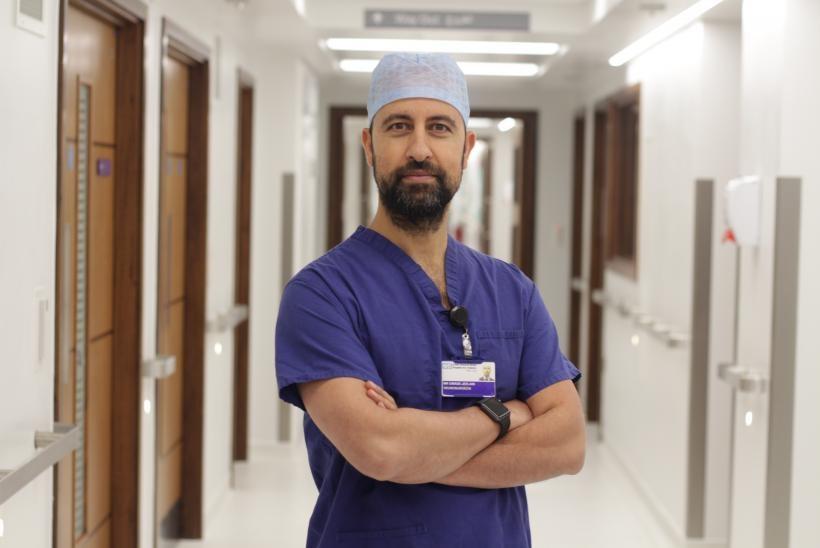
A consultant paediatric neurosurgeon at Great Ormond Street Hospital (GOSH) has helped lead the successful separation of 15-month-old twin girls Mercy and Goodness, who were born in Nigeria with their heads joined at the top.
Professor Owase Jeelani MBE, a consultant paediatric neurosurgeon at Great Ormond Street Hospital (GOSH) and founder of Gemini Untwined, led the surgical team that carried out the complex procedure in Abu Dhabi.
The operation was one of the most complex of its kind and marked only the ninth time Gemini Untwined has supported the separation of craniopagus twins. It involved more than 40 hours of surgery and brought together more than 60 healthcare professionals.
The team included 12 specialists from Great Ormond Street Hospital (GOSH), including surgeons, anaesthetists and theatre staff, who worked alongside colleagues from the UAE, Brazil and Nigeria throughout the six-month treatment programme.
Craniopagus twins are among the rarest forms of conjoined twins, with the girls sharing parts of the skull, blood vessels and brain tissue. Their separation required multiple staged operations, advanced imaging technology, augmented reality simulations and 3D printing to support surgical planning.
The project also drew on complex modelling carried out at the Zayed Centre for Research, helping teams apply advanced techniques including mixed reality-guided implant design and AI-enhanced surgical planning.
Following the final operation, Mercy and Goodness were able to see each other face-to-face for the first time. Their skulls were reconstructed using custom 3D-printed titanium grafts and they are now continuing rehabilitation before eventually returning home to Nigeria.
Professor Jeelani said: "This case was a rare and remarkable triumph, a testament to what is possible when courage, compassion and cutting-edge technology come together. The resilience of Mercy and Goodness, the strength of their family, and the extraordinary partnership between international experts and the team in the UAE made the seemingly impossible achievable.
"It is a beautiful example of how we can produce life-changing outcomes through global collaboration and knowledge-sharing, with skill, technology and humanity coming together to defy all odds."
The case highlights the impact of international collaboration in tackling some of the world's most complex paediatric conditions and bringing together expertise from across multiple countries to improve outcomes for children and families.
